Application
Resistance Welding Electrodes
Threaded electrodes and caps for guns, robots and fixtures
Overview
Why tungsten-copper here
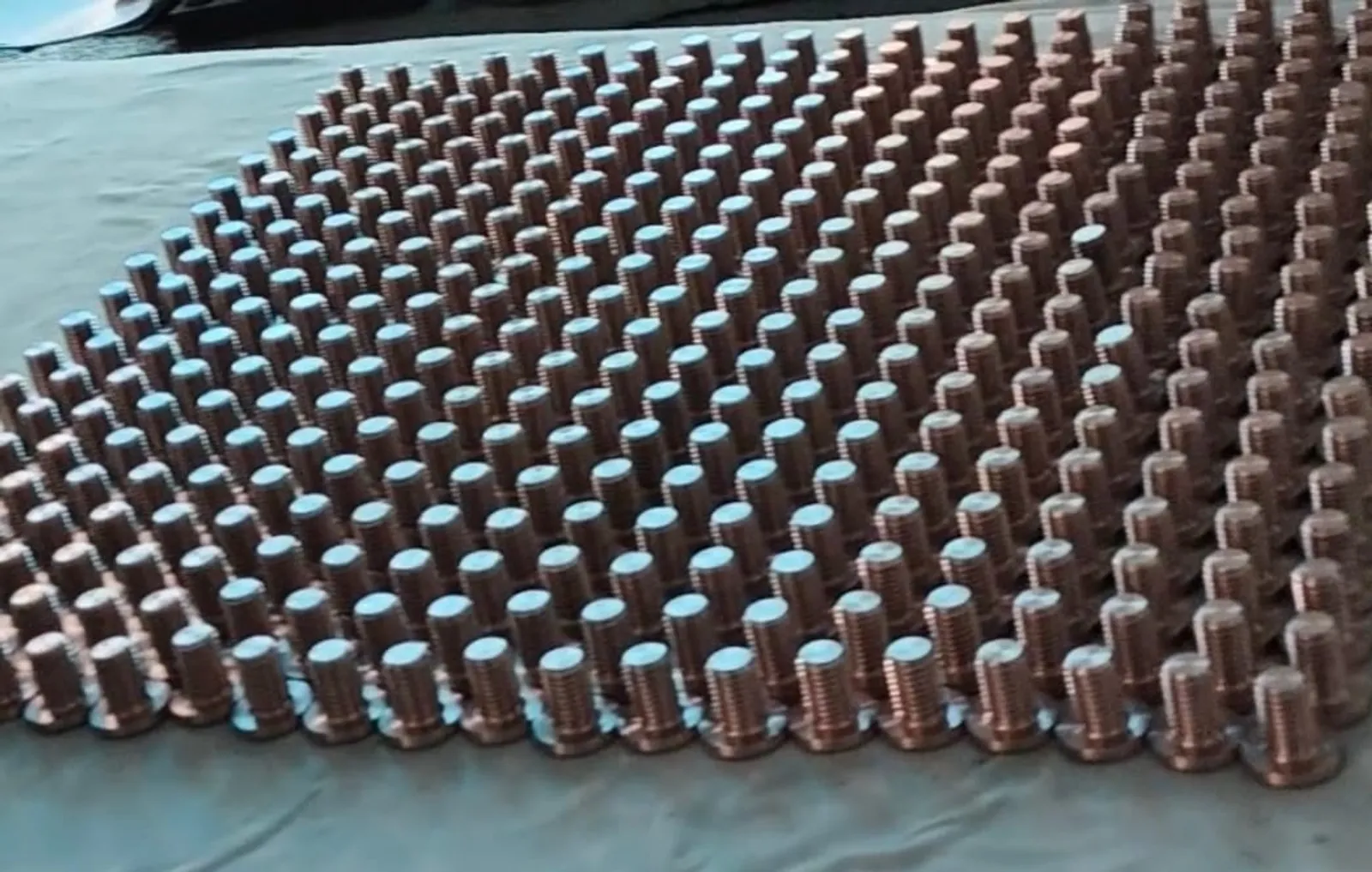
Spot and projection welding electrodes live a harder life than their size suggests: thousands of weld cycles per shift, each one a thermal shock. Tungsten-copper facings and shanks keep their shape where pure copper deforms, cutting dressing frequency and nugget-size variation on high-strength and coated steels.
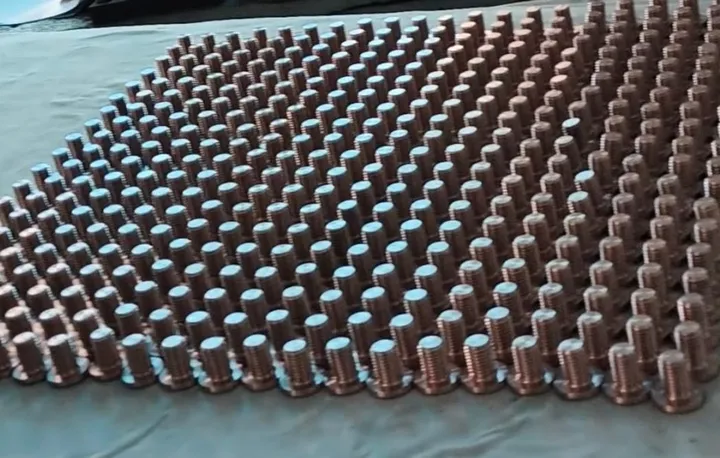
We machine threaded electrodes to drawing — metric, UNC/UNF and special forms — on a 15-lathe cell, with thread gauges verified per batch. Rods and blocks in both W/Cu grades are stocked for shops that machine their own caps, holders and shanks.
-
Less dressing, steadier welds
W/Cu faces resist mushrooming, so nugget size stays stable across the shift.
-
Threaded to drawing
Metric, UNC/UNF or special thread forms, batch-verified with thread gauges.
-
Stock for in-house machining
Rods and blocks in W/Cu 75/25 and 70/30 for caps, holders and shanks.
-
Robot-cell ready
Repeatable dimensions keep automated stations running without re-teaching.
In depth
Application notes
Electrode shapes and what they solve
The consumable geometry is chosen by the weld, not the catalogue: radius-face caps for general spot work, flat and domed faces for projection dies, tapered shanks for robot guns where tip-dress access is tight. We cut all of them from the same infiltrated stock — which means the alloy you validated is the alloy you keep getting, order after order.
Internal cooling matters as much as face shape. We machine water passages to your holder specification, because a W/Cu face only delivers its thermal advantage when the heat it conducts out actually leaves the electrode.
Coated and high-strength steels
Galvanized and Zn-Al coated sheet is where copper-alloy electrodes historically died young: zinc alloys into the face, builds an insulating glaze, and forces earlier dressing. The tungsten skeleton in W/Cu resists that pickup mechanically — the face stays metallic longer, dressing intervals stretch out, and nugget size stops wandering across the shift.
On high-strength steels the load is mechanical instead: higher electrode force drives face growth on soft alloys. This is the case for W/Cu 75/25 facings — the selection logic is covered in detail in our alloy comparison guide.
Related: W75Cu25 vs W70Cu30 selection guide
Consumption rhythms we can serve
Automated gun cells consume electrodes on a predictable cycle, and our supply model is built around it: no minimum order, 10–14 days on standard shapes, and repeat orders machined to the same drawing revision every time. For robot cells running mixed consumables, thread form and shank geometry stay identical across batches — verified with thread gauges and dimensional records.
Shops that machine their own caps and shanks buy our rods and blocks instead: stock shapes in both grades, rough-machined or ground, shipped vacuum-packed with foam lining.
Related: Electrode rods & blocks
Supplied from our floor
Products for this application
Technical library
Further reading
The guides engineers read before they write the second drawing.
- Resistance welding electrode alloys compared CrZr, BeCu and W/Cu against the same six criteria, not against marketing copy.
- RWMA electrode classes explained How to read a class callout on a drawing, and where W/Cu sits in that system.
- Tungsten copper vs chromium copper The switch most plants make first, and the point where it stops paying.
- Tungsten copper vs beryllium copper Performance plus the beryllium handling and regulatory cost nobody quotes you.
- Incoming inspection checklist What to measure on arrival so a bad batch is caught before it reaches the line.
Running resistance welding on your line?
Send alloy, dimensions and quantity — quote back within 24 hours, held for 7 days.