CuW75 / CuW70
Electrode Rods & Blocks
Stock shapes machined from infiltration bar
Both grades available · MOQ: None for stock sizes · Lead time: 10–14 days standard
Overview
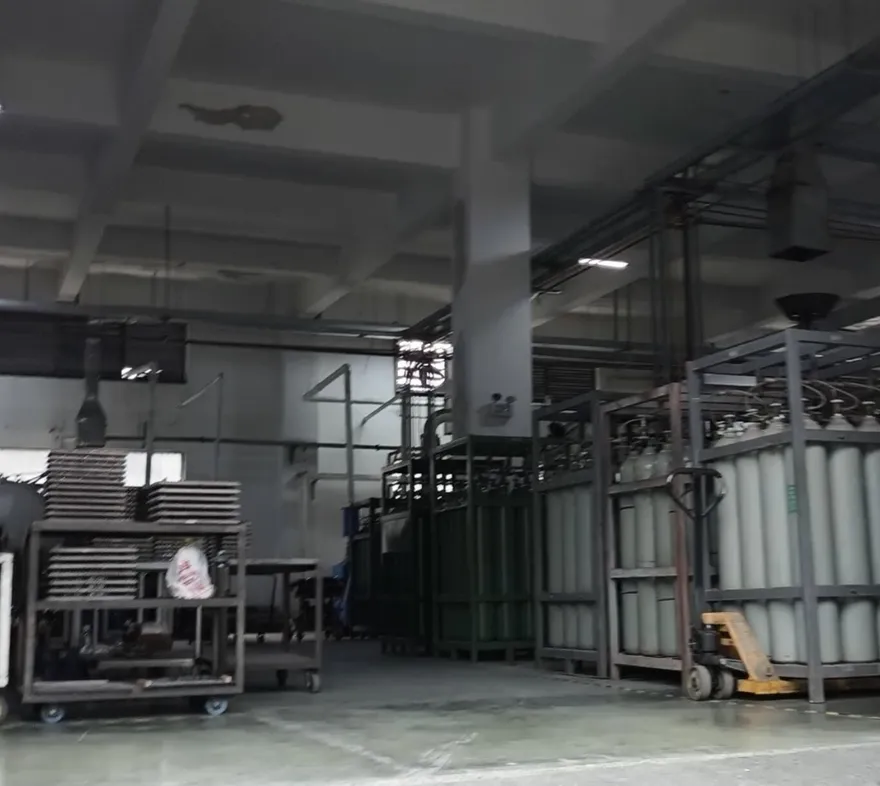
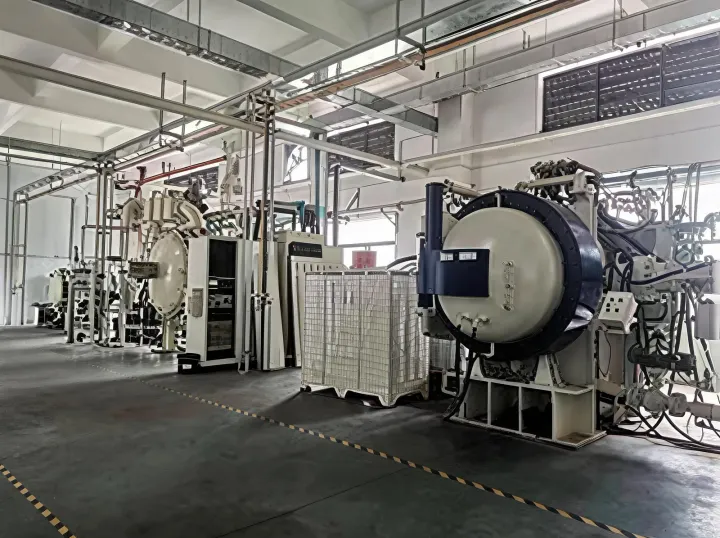
Made by infiltration, finished by machining
Round rods, rectangular blocks, and near-net blanks in both W/Cu grades — the raw stock for spot-weld electrode caps, holders, and EDM electrode sections.
Blanks are supplied rough-machined or ground; send a drawing for finished parts. Rods ship in vacuum bags with foam lining; blocks in wooden crates.
Material values shown are typical for the grade. Per-batch composition, density and hardness reports are provided on request — see quality control.
| Grades | W/Cu 75/25 · W/Cu 70/30 |
| Forms | Round rod · rectangular block · near-net blank |
| Surface | Rough-machined · ground on request |
| Lead time | 10–14 days standard |
| MOQ | None for stock sizes |
Typical applications
- Spot-welding electrode caps
- EDM electrode sections
- Holder and shank material
In depth
Engineering notes
Sizes and delivery condition
Round rods run from small diameters up to the infiltration limits of our press — 400 mm OD is the practical ceiling, and blocks are cut to 100 mm thickness. Stock sizes ship as-rolled and rough-machined; ground stock is available when you need a clean starting surface for your own lathe or grinder work.
Every rod and block ships vacuum-bagged with foam lining, rods in cartons and blocks in wooden crates. Nothing leaves the floor damp or dinged — tungsten copper is dense, and packaging failures break receiving docks, not just products.
Machining notes for your shop
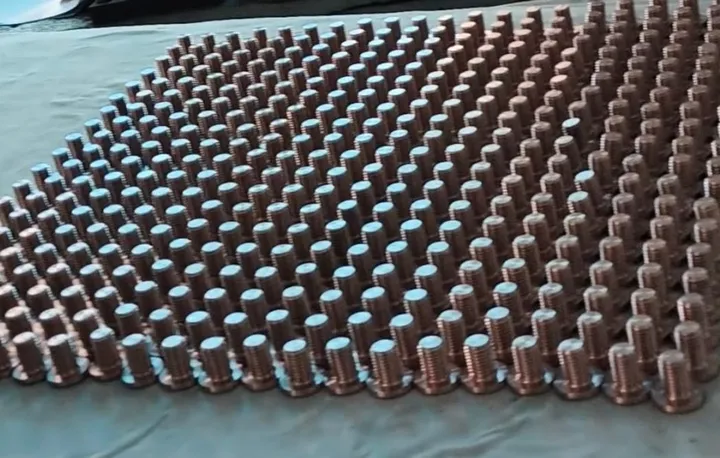
Infiltrated W/Cu machines like a hard bronze: carbide tooling, positive rake, flood coolant, and no grinding required for ordinary turning, milling or drilling. Threading is practical on conventional lathes — which is why our threaded-electrode line runs on standard equipment with gauge checks per batch.
The two habits worth forming: take light finishing passes to avoid tearing the copper phase out of the surface, and support thin sections — the composite is stiff but not forgiving of clamping chatter on slender parts.
What shops make from this stock
The common denominator is consumable parts that see heat and current: spot-welding caps and holders, projection-welding die facings, EDM electrode sections for die-sinking work, and journal or contact surfaces in electrical fixtures.
If your end use is closer to a finished component than a shop blank — bores, profiles, threads, faces — skip the second machining step entirely and send us the drawing; finished parts often cost less than stock plus your machine time.
Technical library
Further reading
The guides engineers read before they write the second drawing.
- How to buy tungsten copper rods and blocks Stock sizes, as-sintered versus machined condition, and how a stock order is quoted.
- Reading a CuW data sheet: properties and density How test-temperature footnotes make the same grade look like two different materials.
- Machining tungsten copper in your own shop Cutting parameters for a material that work-hardens and pulls heat out of the cut.
- EDM electrode material selection Where W/Cu fits against graphite and pure copper — and where it does not.
- How tungsten copper is made: the infiltration process Why infiltration rather than sintering is what makes the density numbers hold.
Also from the same floor
Pair it with
 Best seller
CuW75 · 75% Tungsten
W/Cu 75/25 Electrode Wheels
The workhorse alloy for seam-welding wheels
View specs
 High conductivity
CuW70 · 70% Tungsten
W/Cu 70/30 Electrode Wheels
Higher conductivity for heavy-current welding
View specs
To drawing CuW75 / CuW70
Threaded Electrodes
Precision-threaded welding consumables
View specs
Need Rods & Blocks on a drawing?
Send alloy, dimensions and quantity — quote back within 24 hours.